What Super Agers Eat
Eric Topol is a leading cardiologist, physician-scientist, and author known for his research on cardiovascular disease, digital health, and longevity. He is the founder and director of the Scripps Research Translational Institute and has led influential studies on “super agers,” showing how lifestyle factors—more than genetics—drive healthy aging.
In a recent article, Dr. Topol outlined the diet of so-called “super agers.” These recommendations are outlined below, the full article can be read at https://www.washingtonpost.com/wellness/2026/01/02/longevity-expert-eats-every-day/
- Lifestyle matters more than genetics: Studies of “super agers” (ages 80–105 without major chronic disease) suggest genetics plays a minimal role; habits matter most.
- Follow a Mediterranean-style, anti-inflammatory diet: Emphasize vegetables, fruits, legumes, plants, nuts, seeds, olive oil, fish (e.g., salmon), and some poultry—an approach supported by randomized trials and large observational studies.
- Avoid or sharply limit red meat: Linked with higher cancer risk and inflammation; Topol has avoided it for decades (also influenced by family history of colon cancer).
- Avoid ultra-processed foods when possible: Especially items with long ingredient lists and additives (added sugars, salt, artificial sweeteners, emulsifiers) that are associated with poorer health and inflammation.
- Don’t overdo protein: Avoid the “protein craze,” especially when protein comes from red meat or ultra-processed foods, which may increase inflammation.
- Watch out for “healthy-looking” calorie traps: Smoothies can contain very high sugar and calorie loads (even ~1,000 calories) without people realizing it.
- Pay attention to timing, not just content: Late-night eating and frequent snacking can be problematic; Topol aims to stop eating around 7 p.m. and fast overnight (~12 hours).
- Hydrate—especially if eating high-oxalate healthy foods: Nuts and berries can be high in oxalates; Topol stresses rigorous hydration (he prefers fizzy water) to reduce kidney stone risk.
- Be realistic about alcohol intake: Many people underestimate what “moderate” drinking looks like; Topol frequently counsels patients to clarify and reduce intake.
- Longevity is multi-factorial: Diet works best alongside regular exercise, about seven hours of sleep nightly, and strong social bonds.
Dreading All the Social Events This Season? This Coming Can Help!
If you are dreading all the “peopling” you will need to engage in this holiday season, Shay Mirk and Andee Tagle and NPR’s Lifekit have the solution – in convenient comic form!


Timeless Habits for the New Year
With the new year just two weeks away, and the potential that the run-up to the other holidays has already thrown you off your wellness schedule, we are sharing today 5 timeless wellness tips from our friends from the Harvard Health Blog – enjoy!
https://www.health.harvard.edu/blog/5-timeless-habits-for-better-health-202509243106

The Holiday Blues
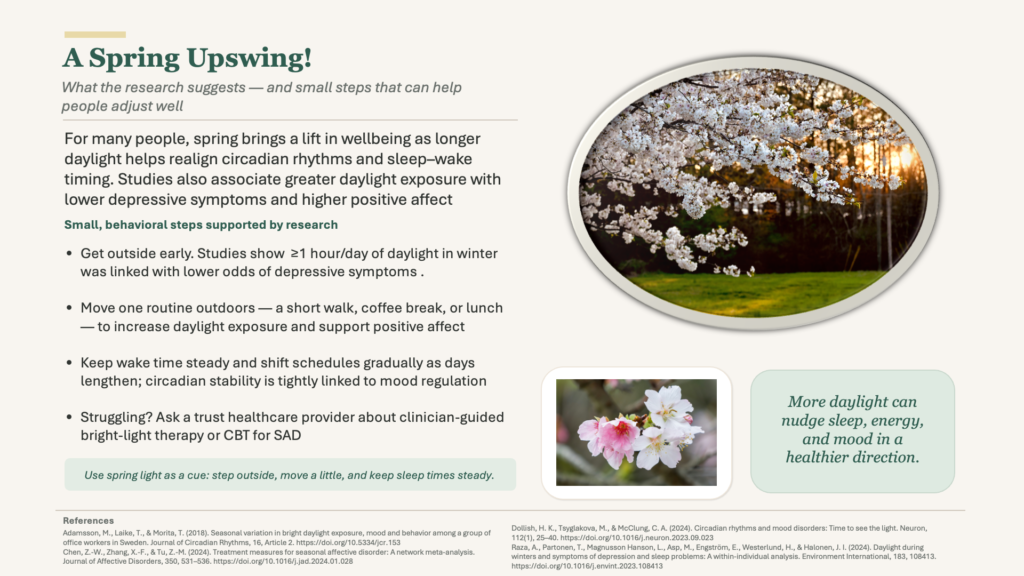
Many people experience depression and anxiety during the winter holidays due to a mix of factors: financial stress from gift-giving, social pressures to appear joyful, loneliness or grief over absent loved ones, and seasonal changes like reduced daylight that can trigger Seasonal Affective Disorder (SAD). Unrealistic expectations and constant comparisons on social media can amplify feelings of inadequacy, making this time emotionally challenging for many.
Tips for Beating the Christmas Blues
- Set Realistic Expectations – Avoid striving for a “perfect” holiday; focus on meaningful moments rather than perfection.
- Budget Wisely – Plan spending ahead and stick to it to reduce financial stress.
- Prioritize Self-Care – Maintain healthy routines like sleep, exercise, and balanced meals.
- Limit Social Media – Reduce exposure to idealized holiday posts that can fuel comparison and anxiety.
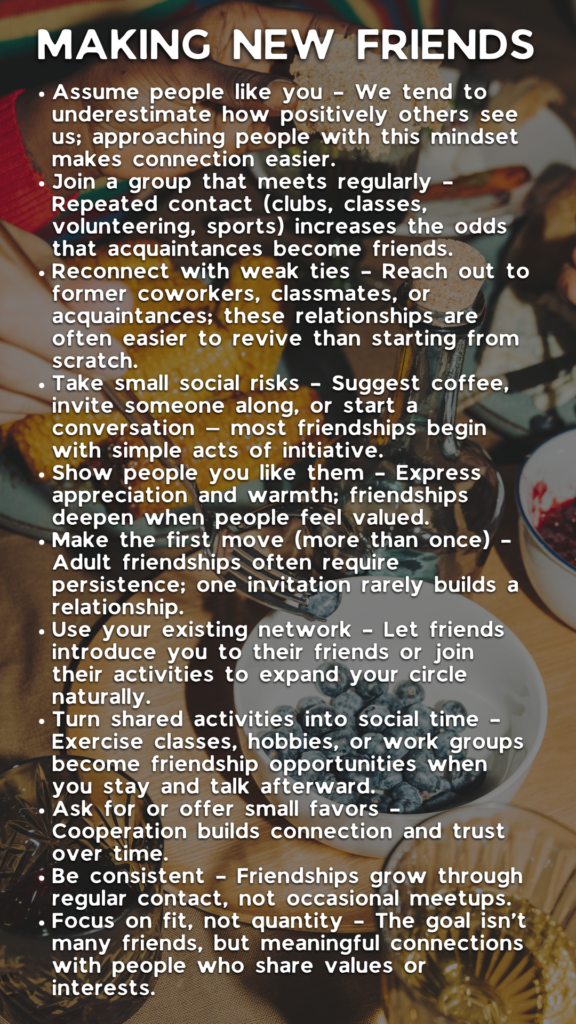
- Stay Connected – Reach out to friends, family, or community groups to combat loneliness.
- Practice Gratitude – Reflect on what you appreciate, even small things, to shift focus from stressors.
- Seek Sunlight or Light Therapy – Counteract winter’s reduced daylight to boost mood.
- Ask for Help – If feelings persist, consider talking to a mental health professional.
Social Media Detox
A new study out last week in JAMA Network Open found that cutting down on social media use even for a week can significantly reduce mental health symptoms in young adults. In addition, a recently published meta-analysis found that limiting social media is tied to a statistically significant boost in “subjective well-being.” If you are interested, ready more at https://www.npr.org/2025/12/02/nx-s1-5627156/social-media-digital-detox-depression-anxiety
If you are ready get some relief, here are a few tips from experts:
1. Block out time
Using social media mindfully can help. That can take the form of setting goals for when we check our phones and for what. For example, setting aside 10-minute blocks at specific times to get rid of notifications or check headlines or unread messages. Doing so seems to work and keeps us from getting distracted or going down rabbit holes for hours.
2. Make it harder to log on and scroll
Removing apps from the home screen and disabling notifications from social media apps can help too. So does logging out of the platform after use, which makes it a little bit harder to get back in.
3. Protect sleep
For many people, social media use affects mood through “nighttime scrolling” by disrupting sleep and contributing to insomnia. For those individuals, restricting evening or nighttime use is key. Tt least one hour of tech-free time before bed is recommended to mentally disconnect from the online world and promote adequate, restful sleep. Parents can help teenagers build a habit of not using social media at night by designating bedrooms as “tech-free zones” at night.
4. Stroll more, scroll less
For those who turn to social media during periods of boredom try replacing screen time with physical activity like a walk or a run. The initial hump is a little bit higher but over time, actually, patients end up liking it more because they get more of a dopamine surge than they do with social media.
5. Seek treatment, if more is going on
For many people, social media overuse is linked to underlying mental health conditions such as depression, anxiety and ADHD. And while cutting back on social media might help alleviate some of those symptoms, he recommends that they also seek treatment from a mental health care provider.
Happy Thanksgiving
As we prepare to celebrate Thanksgiving, it’s a perfect time to pause and reflect on the incredible work happening across the Cooper healthcare system. Every role—whether you’re at the bedside, in the clinic, behind the scenes in administration, or supporting operations—contributes to the healing and well-being of our patients and their families. Your dedication makes a profound difference every day.
Gratitude isn’t just a seasonal sentiment; research shows it can boost resilience, reduce stress, and strengthen team connections. In the fast pace of healthcare, taking a moment to notice what we appreciate can help us recharge and reconnect with our purpose.
So. before your next shift or meeting, ask yourself: “What is one thing I’m grateful for today—big or small—and how can I express that gratitude to someone else?”
Thank you for all you do to care for others and for each other. Wishing you a safe and restorative holiday!
Reasons to be Cheerful
Reasons to be Cheerful was founded by artist and musician David Byrne, who believes in the power of approaching the world with curiosity—in art, in music, in collaboration and in life. Under the banner of Byrne’s nonprofit organization, Arbutus, Reasons to be Cheerful embodies this sensibility, applying it now to the future of our world. Through stories of hope, rooted in evidence, Reasons to be Cheerful aims to inspire us all to be curious about how the world can be better, and to ask ourselves how we can be part of that change.
Topics include Civic Engagement, Climate + Environment, Cities + Towns, Culture, Economy, Education, Farms + Food, Health, Justice, as well as Science + Tech. Each story is founded on the belief that we tell stories that reveal that there are, in fact, a surprising number of reasons to feel cheerful. Many of these reasons come in the form of smart, proven, replicable solutions to the world’s most pressing problems. Through sharp reporting, RTBC stories balance a sense of healthy optimism with journalistic rigor, and find cause for hope. Byrne describes this project as part magazine, part therapy session, part blueprint for a better world.
Want to check it out? Visit https://reasonstobecheerful.world/ today!
Never Skip Brain Day
When we think about the gym we often think about training splits, e.g. cardio day, arm day, leg day, etc. But what about mental exercise?
Scientists are reporting the first compelling evidence in people that cognitive training can boost levels of a brain chemical that typically declines with age.
A 10-week study of people 65 or older found that doing rigorous mental exercises for 30 minutes a day increased levels of the chemical messenger acetylcholine by 2.3% in a brain area involved in attention and memory.
Want to learn more? Read the full article, part of NPR’s “Living Better” series, at https://www.npr.org/2025/10/22/nx-s1-5581409/mental-exercise-reverse-brain-change-aging-acetylcholine
Want to start your brain workout? Head over to https://www.brainhq.com/ and check out their free exercises!
PAY ATTENTION!
Did the headline get your attention and get you to click through? Good!
Rebecca Jennings is a journalist known for her insightful and often culturally reflective writing. At New York Magazine, she covers topics ranging from internet culture and technology to lifestyle trends and social behavior, often exploring how digital life intersects with our emotional and cognitive well-being.
In a recent piece, Rebecca explored the modern crisis of attention, tracing its roots from smartphones back to earlier digital tools like email and PCs. She highlights how constant context-switching and digital distractions have eroded our ability to focus. So what can we do?
Some people are turning to analog activities, mindfulness practices, and community-based efforts like book clubs to reclaim their attention spans. Experts suggest that while tech tools can help in the short term, long-term improvement requires habit change, self-awareness, and intentional breaks. So here are some tips on how to up your attentional game:
- Engage in analog hobbies like pottery, knitting, or drawing to reduce screen dependence.
- Use digital tools wisely: enable DO NOT DISTURB mode, switch to grayscale, or install app blockers.
- Practice mindfulness or meditation regularly to strengthen focus and mental clarity.
- Take frequent, intentional breaks during work to prevent burnout and maintain productivity.
- Develop meta-awareness of your habits to catch and interrupt automatic distractions.
- Join focused communities (e.g., book clubs) to foster deeper engagement and accountability.
- Use distraction-free devices like e-ink tablets for reading and writing.
Chain of Gratitude
“Good morning. The good things in our lives are the result of fantastic webs of interconnected prerequisites.” This according to a recent piece by Melissa Kirsch, longtime contributor at the New York Times.
Melissa recently reflected on the modern concept of gratitude practices, like gratitude journals or jars, which encourage people to intentionally acknowledge the good in their lives—a habit shown to benefit mental, relational, and even physical health. Despite feeling uneasy about the commercialization and cliché surrounding “attitude of gratitude” culture, she described a personal practice that deepens this idea: tracing each moment of gratitude backward through the web of connections and events that made it possible. This reflective process transforms simple appreciation into a profound recognition of interdependence, echoing ideas from Buddhism, Judaism, and Martin Luther King Jr.’s notion of a “network of mutuality.” Ultimately, the practice reveals how every person and event is part of a vast chain of causes, reminding us that gratitude can reconnect us to others and counter feelings of isolation.
Ready to start? Below is the step-by-step, and the full article is available at https://www.nytimes.com/2025/10/25/briefing/personal-history.html

- Start a gratitude practice: Set aside time each day to intentionally acknowledge things you’re grateful for.
- Use a method that works for you: Try a gratitude journal (write three things daily) or a gratitude jar (drop in notes throughout the year to read later).
- Choose one specific thing to focus on: Pick something small—a gift, an experience, or an object that brings you joy.
- Trace its origins: Reflect on how that thing came into your life. Who gave it to you? How did you meet them? What earlier events made that possible?
- Follow the chain of connections: Continue tracing backward, noting all the people, decisions, and coincidences that led to this moment.
- Recognize interdependence: Notice how many relationships and circumstances contributed to your gratitude—how you’re part of a wider network.
- Acknowledge your role in others’ gratitude: Remember that you’re also a link in other people’s chains of connection and appreciation.
- Use this reflection to counter disconnection: When feeling lonely or isolated, repeat the process to remind yourself of the many ties that bind you to others.
- Embrace sincerity over performance: Avoid treating gratitude as a trendy or performative act; focus on genuine reflection rather than social display.
- Repeat regularly: Make this expanded, interconnected form of gratitude a consistent habit for deeper emotional grounding.